Strategy
Surfing Portugal in summer, and beating the nortada
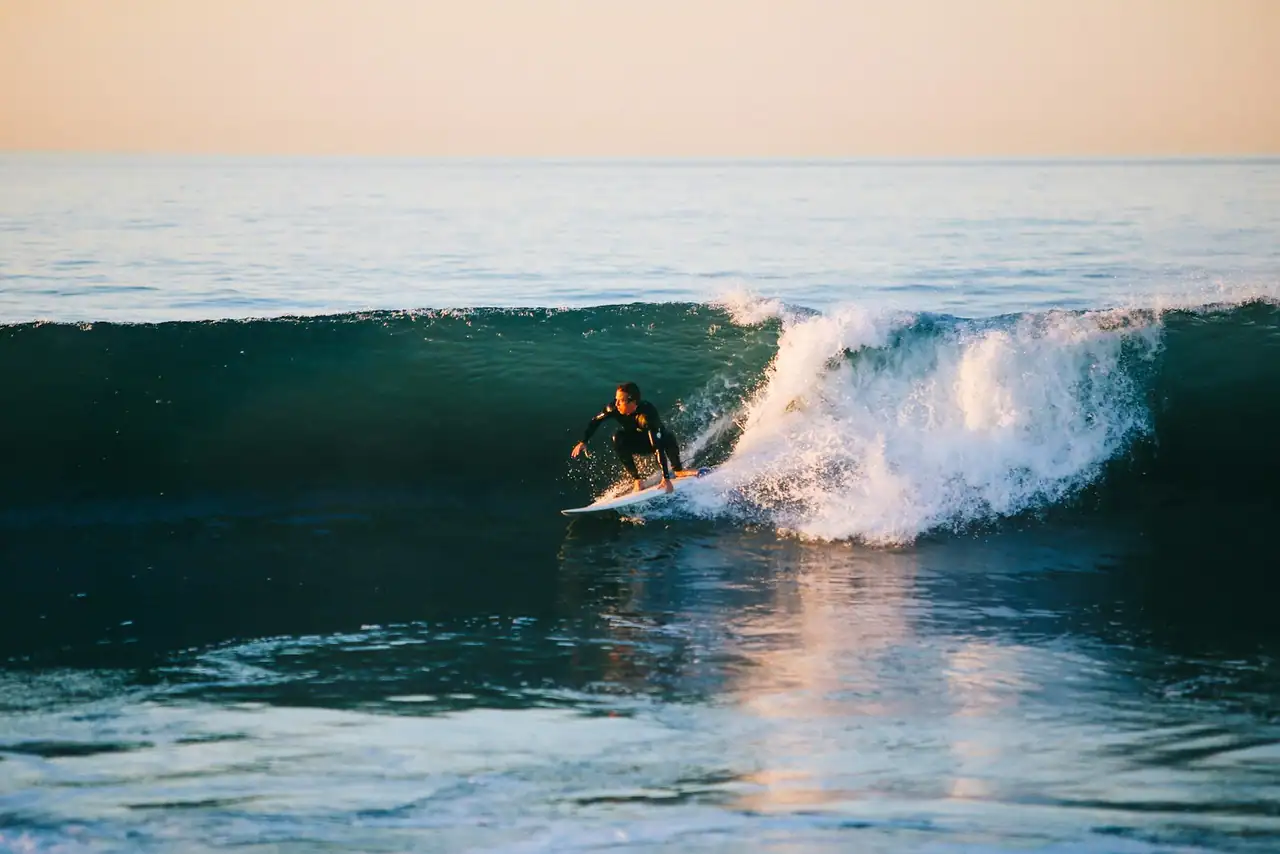
Summer is small, warm and crowded, and the north wind wrecks most afternoons. How to still get good waves: dawn, shelter, or the Algarve.
Summer, June to August, is the gentlest surf of the year and the time almost everyone learns. The water is 18 to 20 degrees, a 3/2 or even a shorty, the beach breaks are soft, and every school and camp is at capacity. The catch is the nortada: a strong, dry north wind that sets in most afternoons and turns the exposed west coast into chop and closeouts by lunchtime.
Working around the wind
Surf at dawn. The wind is usually light until mid-morning, so first light to about 10am is the clean window, every day, all summer. This is the single most useful habit for a summer trip.
Pick a sheltered spot. Costa da Caparica, south of Lisbon, sits at an angle that the nortada blows offshore or cross-off, so it can stay clean in the afternoon when everywhere to the north is destroyed. Some south-facing corners of bays behave the same way.
Go to the Algarve. The south coast faces away from the nortada entirely. It is smaller and less consistent, but on a summer afternoon when the west coast is unsurfable, Lagos, Sagres and the central Algarve beaches are often glassy. The far southwest around Sagres also picks up more swell than the rest of the south.
Who summer suits
Beginners and improvers, families, and anyone travelling with non-surfers. If you want size and power, summer is the wrong season and you should look at autumn.
Practical notes
Book camps and lessons weeks ahead for July and August. Beaches and car parks fill by mid-morning. The upside of the nortada is that the afternoons are made for the beach, and for kite and windsurf at Guincho, Foz do Arelho and the Algarve lagoons, which come alive exactly when the surf shuts down.
Spots in this guide

São João da Caparica
The northern end of Costa da Caparica, where a line of groynes shapes the sandbanks and most of the area's surf schools operate. Sheltered from the north wind, so it is a key summer option near Lisbon.
All levelsAutumn to spring for size; summer for the sheltered lessons
Guincho
An exposed dune beach below the Sintra hills. The summer nortada makes it one of Europe's best wind and kite spots; in the calmer months it is a serious, current-heavy beach break.
IntermediatesSurf autumn to spring; wind and kite in summer
Foz do Arelho
Where the Óbidos lagoon meets the Atlantic: an open ocean beach break on one side and a flat, shallow lagoon for kite and windsurf on the other. A two-in-one spot backed by a big car park.
All levelsAutumn to spring for surf; summer thermal wind for the lagoonGuides
See more
A 7-day surf trip down the Silver Coast
The straightforward one-week route through the heart of Portuguese surf: Peniche and Baleal, then south to Ericeira, with Santa Cruz as the quiet card in the middle.
A long weekend surfing Ericeira
Three or four days in the World Surfing Reserve, no car needed, with a plan that scales from first lessons to the reefs.

A week surfing the Algarve
Base in Lagos or Sagres, chase the wind between two coastlines, and use the west-coast beaches when the south goes flat.